
How do you raise children with a biblical worldview when the culture around them teaches something different? If you’re a Christian parent who wants to help your children understand what’s true, especially when it comes to difficult topics like abortion, science, and the value of human life, this conversation will help you think about where to begin.
I sit down with Dr. William Lile, known as the Pro-Life Doc, a board-certified OB-GYN who has delivered more than 5,000 babies. We discuss how the worldview children develop before age 13 shapes the rest of their lives, how fetal medicine supports conversations about the value of human life, and why parents need to address hard topics with both biblical conviction and Christlike compassion. I also share personal stories from my own pregnancies, including navigating uncertainty during a high-risk pregnancy.
Dr. Lile explains how parents can begin age-appropriate conversations with their children, the emotional and spiritual impact abortion can have, and what his family learned through 14 years of homeschooling. Whether you’re homeschooling your children or simply seeking to be more intentional about the values you’re teaching at home, this episode offers encouragement to build your family’s foundation on God’s truth.
In this episode, we discuss:
- How a child’s worldview is largely formed before age 13
- How Dr. Lile went from practicing OB-GYN medicine to pro-life ministry
- What fetal medicine reveals about the humanity and value of unborn children
- My experience navigating a high-risk pregnancy and uncertainty about my baby’s health
- How to begin age-appropriate conversations about abortion and the value of life
- The emotional, psychological, and spiritual impact of abortion—and the hope of healing through the gospel
- How parents can raise children with biblical conviction and Christlike compassion
- Lessons from Dr. Lile’s family’s 14 years of homeschooling
Resources mentioned:
- Learn more about Dr. William Lile and explore the Pro-Life Doc curriculum: www.prolifedoc.org
Ready to take your next step?
If you’re longing for a slower, more present life at home but aren’t sure how to get there, I’d love to help you talk through what you’re discerning.
Book a free clarity call to explore your next step toward home.
About Dr. William Lile
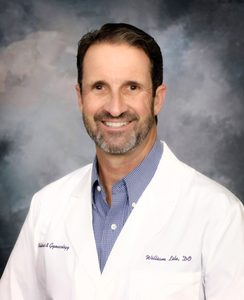
Dr. William Lile is the founder of ProLifeDoc.orgDr. Lile is Board Certified in Obstetrics and Gynecology. He is licensed to practice medicine in both Florida and Alabama, and he has delivered over 5,000 babies. He has been an instructor with both The University of Florida and The Florida State University OB/GYN Residencyprograms. In 1999 the practice that he took over was the largest provider of Abortions in Pensacola, Florida. ALL Abortions and Abortion referrals were stopped on Day #1 and the ministry of ProLifeDoc was born. He serves on the Focus on the Family; Physicians Resource Council, is a Medical Advisor for the Abortion Pill Reversal Network, and is a frequent guest of TV, Radio, and Podcasts. This year he produced a 10 chapter Video curriculum with workbooks and role playing exercises as a training resourcefor all defenders of God’s Pre-Born.
Connect with Dr. Lile
Instagram: @prolifedoc_
Website: ProLifeDoc.org
About Me, Your Host
Website
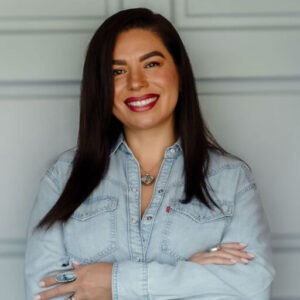
Hi, I’m Karla!
I’m a wife, mom, author, speaker, certified coach, and the host of Discovering HOME.
I began my career in the Los Angeles Mayor’s Office and went on to hold roles within the City’s Community and Economic Development Departments, managing programs designed to expand educational and economic opportunities for families and small businesses.
After nearly 20 years in City government, I stepped away from my career in 2017 to focus on raising my daughters and creating a different kind of life—one centered more intentionally around faith, family, and home.
That experience changed the way I think about success, calling, and purpose. It taught me that following God often means being willing to reconsider the way we’ve been taught to define a successful life.
Today, through Discovering HOME, speaking, and coaching, I help Christian working moms prayerfully discern whether God may be calling them home and consider their next steps with greater clarity and confidence.
I’m so glad you’re here.
About Discovering HOME
Discovering HOME is the podcast for Christian working moms who want to become stay-at-home moms and are asking whether God is calling them home.
We talk about navigating faith, motherhood, calling, and the courage to trust God with what comes next.
You love your family, you’re good at your job, and the pull toward home keeps coming back anyway. You pray about it, and the practical questions show up right behind the prayer. Can we afford one income? Who am I if I’m not the one with the title and the paycheck? You’re not alone, and you don’t have to figure it out on your own.
Hosted by Karla B. Monterrosa, author and faith-led certified coach, this podcast for Christian moms brings biblical encouragement and practical wisdom to the decision in front of you. Karla spent nearly 20 years in municipal government before stepping away in 2017 to follow God’s call home, and she now homeschools her daughters. She created this space for women who love the Lord, love their families, and are ready to trust Him with a new way of life.
We’ll answer questions like:
- How do I become a stay-at-home mom?
- Should I be a stay-at-home mom?
- Can I afford to be a stay-at-home mom?
- Is God calling me to be a stay-at-home mom?
- How do I know if God is calling me to stay home?
- Will I regret quitting my job to be a stay-at-home mom?
- Who am I if I’m not working?
- How do I find purpose at home?
- How do I find peace when I’m living in survival mode?
Each week, you’ll hear Karla on her own, working through the questions moms ask when they’re discerning a move home, and in heartfelt conversations with moms and experts who have lived this transition. We also cover budgeting for one income and growing in purpose-driven Christian motherhood.
If this is the question on your heart and in your prayers, hit follow and join Karla every Wednesday.
Continue Your Journey
If you’re a Christian working mom discerning whether God is calling you home, I hope you’ll continue exploring Discovering HOME for biblical encouragement, practical wisdom, and support as you navigate your next steps.
Connect with Me!
Instagram: @discoveringhomepodcast
Website: www.karlabmonterrosa.com
Speaking and Interview Inquiries:
Email podcast@karlabmonterrosa.com
Ready to Start Your Journey Home?
Wondering whether God is calling you into a new season of motherhood?
Take my free quiz, Is God Calling You Home?, to begin discerning your next steps.
Stay Encouraged
Subscribe to my email list to receive biblical encouragement, practical wisdom, and free resources to help you begin your journey and never miss an episode announcement.
Related Episodes:
- 06 Our Homeschool Story: Why We Left Traditional School for Faith-Centered Learning at Home
- 07 Can I Really Homeschool? Top 10 Questions Christian Moms Ask About Socialization, Schedules & Confidence
Read the Full Episode Transcript
Welcome back to Discovering HOME. I’m your host, Karla Monterrosa, wife, homeschooling mom, author, speaker, and founder of Discovering HOME, where we encourage Christian moms to build homes rooted in biblical truth and to live with greater peace, presence, and purpose.
Today, I’m really excited to share a conversation with Dr. William Lile, better known as the Pro-Life Doc. Dr. Lile is a board-certified OB-GYN who delivered over 5,000 babies before leaving private practice to devote his life to equipping families and churches to defend life through both science and Scripture.
In 1999, he took over what was then the largest abortion provider in Pensacola, Florida. On his very first day, all abortions and abortion referrals were permanently stopped, marking the beginning of what would become the Pro-Life Doc Ministry. Today, Dr. Lile travels the country teaching the scientific evidence for life in the womb, equipping believers to engage these conversations with both truth and compassion.
He is also the creator of a comprehensive 10-chapter video curriculum, complete with workbooks and role-playing exercises, designed to equip parents, churches, educators, and anyone who desires to become a more confident defender of God’s preborn children.
In today’s conversation, I share my own deeply personal pregnancy stories and the challenges that shaped my family’s convictions and strengthened our trust in God.
Together, Dr. Lile and I discuss why a child’s worldview is largely formed before the age of 13, the remarkable advances in fetal medicine that are transforming the way we care for babies in the womb, and how parents can confidently raise children with both biblical conviction and Christlike compassion.
Whether you’re a parent, grandparent, educator, or simply someone who wants to better understand these issues through the lens of both science and Scripture, I know this conversation will both encourage and equip you. Let’s dive in.
Dr. Lile, welcome to the Discovering HOME podcast.
Well, Karla, thank you very much. It’s an honor to be on with you and your listeners, and to use your platform to teach them some new tools.
Thank you so much for being here.
When we met last year at the Live Action Summit, I knew instantly that I wanted to share your work and your resources with my daughters in our homeschool, and I’m so excited to be able to bring this conversation to my audience as well.
Worldview Forms Before Age 13 (2:39)
Well, it’s important that we teach our young people, and we have a real focus on that.
Dr. George Barna works through Arizona Christian University. Every year for the past couple of decades, he has done a survey looking at a biblical worldview in the United States. And, of course, the biblical worldview continues to decrease, and the secular worldview continues to increase.
Every adult has a worldview, and your worldview is going to be involved in every decision you make. Are you going to cheat on your taxes? Are you going to cheat on your spouse? Are you going to be a reckless driver or drink while driving?
All those things are influenced by our worldview. The worldview that we have as an adult is pretty much established with 90% sensitivity before we turn age 13. So if we’re waiting to talk about life and abortion until kids are in high school or college, we’ve really missed the boat. Their biblical or secular worldview is established before they even become teenagers.
That’s why it’s so important that we discuss this issue with our high school students and our middle schoolers. We were just in Hawaii, and we did 26 events in eight days. We actually gave pro-life presentations to children from pre-K through third grade.
We didn’t discuss abortion, but what we did do was let them know that when a woman has a big belly, it’s not because she eats too much ice cream. There’s a baby on the inside.
We used tools like 2D ultrasound, 3D ultrasound, MRI imaging, and fetoscopy, where we put a camera on the inside. It’s absolutely vital that we train up our children and train up the church to really engage and be victorious in the greatest spiritual battle this nation has ever faced, and that’s the issue of life and abortion.
From Abortion Clinic to Pro-Life Ministry (4:26)
That’s absolutely right, and I completely agree with you. I think it starts very early on, having these conversations with children, because they’re not only listening to what you’re saying but watching what you’re doing. Being aware and educated ourselves is so important.
Can you share a little bit about what led you to this work? Did you always know you wanted to be involved in the movement of saving lives, or was there a particular moment that led you into the work you’re doing today in this ministry?
Well, I was always interested in medicine. Even as a young boy, medicine fascinated me. I was in the hospital a lot. I had to have plastic surgery after an accident, an appendectomy, and a tumor removed from my hand. Medicine interested me, and I was blessed to grow up in a home with a mom and dad who were Christians.
I can even remember them attending an event in Cherry Hill, New Jersey, for a pregnancy resource center back in the late 1970s.
I went to medical school and didn’t know what I wanted to do. I really thought I was either going to do trauma or emergency medicine, something like that. But then I became fascinated with obstetrics and gynecology, so that’s what I did my residency in at the University of Florida.
After I finished my residency, I’d been in school for 12 years, and the question was, “Now it’s time to get a job. Where do I want to set up a practice?” After doing our research, a practice that might be available happened to be the largest abortion clinic in the Pensacola region.
We negotiated with the physician. He signed a two-year non-compete, which meant that once we took over the practice, he couldn’t practice any medicine in our tri-county area for two years. The plan was that it was a good location. It was only two blocks from the hospital where we’d be delivering babies.
It wasn’t a great business idea, because he hadn’t done deliveries in years, but he was the largest abortion provider on the whole Florida Gulf Coast. So, on day one, we stopped all the abortions and talked to the staff.
We said, “Hey, you are welcome to stay. You know the patients, but here’s the new deal. We’re not going to perform any abortions, and if you refer somebody to another location for an abortion, that would be grounds for termination of employment.”
People stayed for years, some for over 10 years, with us, and we brought them out of that work.
But it was on a Sunday afternoon when I finally had a key to my own practice. I went over to the office after church. I’d seen the first floor—the waiting room, the exam rooms, my office, and the ultrasound room—but I had never gone upstairs, and that’s where the surgical suite was.
I can still remember going up those stairs. The thing I was thinking was, “How many thousands and thousands and thousands of moms with a baby on the inside had walked up those same stairs, made a turn, and then…” I made that turn, and I saw the abortion machine.
I saw the exam table, the stirrups, and the instruments already out for Monday morning’s abortions. I thought to myself, “Oh, my gosh, how many lives were lost right here?”
We had Pensacola Christian College right up the street. We had big megachurches on the corners. So I asked my pastor if I could do a presentation. I told him what I had seen, and he said yes. That was really the start of the ministry.
Now, we’ll speak at between now and Thanksgiving—we have 42 out-of-state events. We delivered over 5,000 babies during my career, but on July 1, we left our private practice. We gave the hospital and my partners nine months’ notice and said, “Hey, we’re going to be moving into a next phase of life.”
We stopped practicing medicine and went into full-time ministry. Our goal is to save the lives of babies in the womb, but also to equip those who are pro-life with new tools and to convince those who think abortion is healthcare that this is not healthcare.
Healthcare is when we treat, diagnose, and cure babies in the womb. But killing a patient on the inside is not healthcare. So this is what we do full-time now, and we’re just loving it.
Karla’s Pregnancy Challenges (8:49)
That’s amazing, and I’m really passionate about this topic. I’ll share more about how the Lord transformed my mindset around this.
The reason I’m so passionate about this is that we have two teenage daughters, and with both of them, we had unexpected challenges. By God’s grace, with the little information I had at the time, we were always on the side of life.
My pregnancy with my 15-year-old daughter was high-risk and very stressful. I was working full-time and commuting a long distance. One day, while I was at my office, I got a phone call telling me that something was abnormal with my umbilical cord, and that the last ultrasound had also found a spot on my daughter’s heart.
After further analysis and conversations with doctors, they told me that my umbilical cord had not formed properly. Please correct me if I’m wrong, but I understood that most babies have one vein to bring in nutrients from the placenta and two arteries to take waste from the baby back to the placenta.
In my case, I had the vein and just one artery instead of two. That meant the umbilical cord would be strained throughout the pregnancy, with one artery doing the work of two.
We were told that our baby might not grow to the weight she should. There was a possibility that she might not thrive in the third trimester and that I might not make it to full term.
We were also told that these two concerns were considered markers for children with genetic disabilities, and that it was possible our baby would be born with Down syndrome. We were presented with the option to have further testing and were informed that those tests also carried risks of miscarriage.
The whole pregnancy was very stressful, and we feared for our daughter’s life in the womb. We had a difficult choice to make: continue testing, or wait, pray for the best, and trust God.
Fortunately, we had a doctor ask us the most important question. She said, “If your baby is found to have Down syndrome or some other genetic disability, will you have an abortion?”
That quickly settled it for us. We did not move forward with any further testing. We prayed for God to deliver us a healthy baby, but regardless, we knew we were going to have her. We were going to have her regardless, and we were grateful. We were blessed to have that perspective early on.
She was born at 41 weeks, full-term and past her due date, perfectly normal and healthy. All of those concerns and risks that we could have taken with her life really were unnecessary.
On the other hand, we had a very smooth and normal pregnancy with my older daughter. There were no signs of any developmental concerns in the womb, and our daughter does have special needs. She’s such a special girl—loving, creative, and she deeply loves the Lord. She has been such an encouragement and a blessing to our family.
Both of our girls have brought us so much joy, and I could not imagine my life without them.
It’s incredible to see how God works from early on. Like you said, the worldview we came into this process with saved us a lot of risk, heartache, confusion, and fear.
My husband was also very quick to answer that question. He said, “Absolutely, we’re having this baby regardless.”
That protected us from the start. It didn’t allow any time for fear, doubt, or confusion to creep in. I’m so grateful for him and for his heart to protect our family, even early on when we were so young and knew so little back then.
Yeah, it’s great having a father, a husband who recognizes his role biblically.
The role of a man is to be a defender and a protector. He’s the defender, protector, and provider for you, but he’s also the defender and protector of the baby that’s on the inside of the womb.
When it comes to the abortion debate and pro-life ministries, this is not a ladies’ thing. This is not a pink thing.
Absolutely.
This is not a Vera Bradley, Laura Ashley type of thing. We need men involved because every single pregnancy involves a guy. There was one that didn’t—that was 2,000 years ago. It’s not happening again. But every pregnancy does involve a guy.
So many of these dads didn’t have the benefit of growing up with a dad in their own homes, and they don’t know about the thrill and the privilege of being a father and helping raise their own child, their boy or their girl.
It’s great having men involved in pregnancy resource centers to take them aside and say, “Look, let me teach you how to be a dad.”
Not yell at them and say, “I can’t believe you got her pregnant.” That kind of discussion is way past. Now it’s like, “Congratulations, you’re a dad.”
They might say, “Well, she hasn’t had the baby yet.”
No, you’re a dad. Reproduction has already happened. We’re here to help you be a good provider, to love your spouse, and to learn how to raise a child and get involved.
It’s amazing how the Body of Christ is supposed to function as one. It takes a lot of women in a pregnancy center and in a ministry, but it also takes the guys.
Absolutely. You’re absolutely right, and we’re so grateful to have these men who have taken up that calling seriously.
We believe God doesn’t make mistakes, and so He created our children intentionally and with a purpose. It’s clear because they have both made our lives so much better. We’re more compassionate, more aware, and more gentle because of these kids the Lord has given us. We’re truly blessed.
Fetal Medicine & the Pro-Life Case (13:45)
Let me tell you about the science that we’re seeing in medicine today, because it helps illustrate why these babies are patients who deserve care and protection.
About the ProLife Doc Curriculum and Fetal Medicine (14:45)
I’d like you to talk a little bit about the curriculum, because my girls and I went through it last year, and you’ve added new material, so we’re excited to dive into that this coming year as well.
One of the most surprising things I learned through the course was about all the in-womb treatments that exist to save the lives of babies. I don’t know how I’d never heard of that before, and so I’d love for you to get into some of that as well.
It’s a great tool, and it’s really the future of medicine. We’ve been doing this for many, many years.
We’re now on an “Abortion Is Not Healthcare” national tour of colleges and universities, and we’re going to be all over. We just got a request to speak at UCLA in November.
The question we’ll start off with the students is, “Do patients have rights?”
Of course, they’re like, “Yeah, of course patients have rights. There are laws in all 50 states which protect the rights of patients.”
Then we’ll ask the next question: “Well, do those laws also protect the rights of patients who weren’t born in the United States?” Now the students get really indignant. They say, “You better believe they apply to them as well. It doesn’t matter if they weren’t born in the United States; they still have rights.”
I say, “I agree with you. I’m just saying that those rights need to apply to all patients who weren’t born in the United States yet.”
That’s a big transition because they all drop their jaws and ask, “What do you mean, ‘yet’?”
Then we start to explain how we are now diagnosing, treating, and curing babies in the womb.
For decades, we’ve been doing blood transfusions for babies while they’re still inside the womb. We’ve done this procedure at our hospital 16 weeks after conception. The Cleveland Clinic has done this procedure just 15 weeks after conception.
Why would a baby need a blood transfusion? We’ll explain it to them. From the moment of conception, when one egg and one sperm get together, the baby is genetically unique from the mom, genetically unique from the dad, and genetically unique from the other eight billion people on the planet.
Moms and babies can even have different blood types. Half the time, they have a different gender. Mom is obviously female, but about half the time the baby is male.
We can also see that there are conditions that require treatment. In fact, when you were pregnant and had blood work done, one of the things they look at in your routine opening blood work is whether you have antibodies.
Are there antibodies in your blood that can cross the placenta and start to attack the baby’s blood? Mom’s blood and baby’s blood are often a different blood type, and they don’t mix together. There are conditions where the mom’s immune system sends tiny antibodies across the placenta to the baby’s blood and attacks it, causing the baby’s blood count to start dropping.
We can actually see how low that blood count is getting with an ultrasound. We can measure the speed through something called the middle cerebral artery in the baby’s brain and see whether the baby has a low blood count.
If the baby does, we have two options. One, we can deliver the baby and let the baby go to the nursery to be in a safe environment.
But sometimes we’re only 18 or 20 weeks along, and babies don’t survive at that young age. We need to give the baby a blood transfusion.
We can take O-negative blood. If you’ve gone to OneBlood or the Red Cross and donated blood, we can take that blood and put it in a syringe. We can then use an ultrasound and a long needle to guide the needle through the mom’s skin, through the wall of the uterus, and directly into the umbilical vein.
You talked about how normally there’s one vein and two arteries. We go directly into that one umbilical vein, and when we do, we give that baby a life-saving blood transfusion.
Sometimes we have to do this every three or four weeks.
But now we’ve gotten to the point where we’re not just giving them blood and medications. We’re even doing open-heart surgery.
There was a case at the Cleveland Clinic where, on ultrasound, a baby was diagnosed with a tumor right on the heart. It’s called a cardiac teratoma. The tumor was growing so quickly that they estimated the baby was going to die in one to two weeks.
Option number one was to deliver the baby, have a one-and-a-half-pound, 26-week baby, and do open-heart surgery. But when the baby goes to the nursery, we have a tiny baby who is also struggling to breathe.
The doctors at the Cleveland Clinic talked to the parents and said, “We think we can perform another option, and that other option is to do open-heart surgery on your baby while it’s still on the inside of the womb.”
On the day of the surgery, at 27 weeks’ gestation, the parents agreed. Mom received an epidural so she was comfortable but wide awake.
The OB, like me, made an incision in the mom’s skin and then another incision in the wall of the uterus itself, kind of like a mini C-section. But they didn’t deliver the whole baby. They just brought the baby’s right hand and left hand out.
Why? I thought you were doing heart surgery. The team had a pediatric anesthesiologist who started a tiny IV in the baby’s hand. The baby could receive fluid during the three-hour surgery and pain medicine in the form of fentanyl, along with a paralytic called Norcuron so the baby wasn’t moving around.
Once the baby was comfortable, they brought in the heart surgeon. They made an incision in the baby’s chest and opened it. The baby’s heart was beating about 120 to 130 beats per minute, perfectly normal. The surgeon then spent three hours carefully removing the tumor from the baby’s heart.
When the tumor was removed, the heart went, “Thank you very much.” The bleeding was controlled, and they were able to close the baby’s chest, remove the IV, tuck the hands back inside, and close the uterus, fascia, and skin.
This was all at 27 weeks’ gestation. The baby didn’t go to the recovery room. The baby stayed in the “recovery womb” for 10 weeks and wasn’t delivered until 37 weeks.
His name is Rylan, and he’s still doing great.
We’re also routinely doing vascular brain surgery for something called a Galen malformation. We’ve been doing corrective surgery for spina bifida for over 25 years, repairing the hole in a baby’s spine while the baby is still inside the womb.
Now that we’ve been doing this for two and a half decades, we’re finding that when we operate on these babies in the womb and compare them with babies who receive corrective surgery after delivery, the babies who had surgery in the womb can go upstairs faster and walk downstairs faster.
They have better control of their bladders and bowels and fewer additional procedures. We’ve actually improved their quality of life for the rest of their lives by taking the initiative and operating on them while they’re still in the womb.
We’re doing amazing surgeries, and it’s now routine. We just had a baby flown from London, England, all the way to Texas Children’s Hospital for repair of something called gastroschisis, where the bowel, instead of being on the inside of the baby’s abdomen where it should be, was all on the outside.
They used surgery to put the bowel back on the inside and close everything up. The baby had zero complications during the surgery and wasn’t delivered until 40 weeks’ gestation. The baby was delivered vaginally, even though they’d done surgery through the uterus, and there were zero complications.
Patient’s Rights (22:57)
So all 50 states have laws to protect the rights of all patients. A patient’s a person, no matter how small. Now we can illustrate that we knew this was life in the womb from the moment of conception.
Scripture even talks about how the baby—Luke, in Luke 1, described how John the Baptist leapt in his mother’s womb for joy. Not only was he moving around on the inside, but he expressed that human emotion.
God could have chosen any way for Jesus to come to Earth as our Savior. He could have said, “You know what? We’re just going to slip Jesus on down there. He’s going to wander in out of the wilderness when he’s 30 years old. He’ll start His ministry, give His life on the cross, be dead for three days, and then conquer death and rise again.”
But God had a different plan all along. His perfect plan was for Jesus, our Savior, not to come to Earth as a 30-year-old, but to come to Earth as an embryo, a tiny, one-cell person there in the womb of Mary.
Not only can we see the beauty of the science, but we can look at Scripture. Science shows us things like cell differentiation, embryogenesis, and fetal development in the womb. That’s the science. It’s amazing how something will be at 17 days, and I know that something different is going to happen at 18 days.
But how does this tiny little baby know what it’s supposed to do tomorrow? That’s because there’s an amazing design. And when you have that kind of design, there had to be a designer.
In Psalms, it describes how, “You knit me in my mother’s womb.” That’s really a description of what we now know through science.
We use science because all true science was created by God, so all true science will also defend His preborn children in the womb. We’re trying to show the scientific facts. Follow the true science, which will always defend the life of God’s preborn children, because they are not just born in the image of God. They are created in the image of God when one egg and one sperm come together.
They’re my patients. Is mom my patient? Absolutely. I’ve delivered 5,000 babies, but the baby is also my patient. I’ve delivered lots of twins, triplets, and quadruplets. Even when you have quadruplets, you have five patients you’re seeing every single week when they come into your office.
Patients have rights. Patients have rights if they weren’t born in the United States, and patients have rights if they weren’t born in the United States yet.
When should we begin having these conversations with children? (25:41)
Absolutely. That’s incredible. I think it’s such a blessing that we’ve come so far, and you’ve made the curriculum easy to understand and very graspable.
My girls are in high school now, but I think you said it’s appropriate for ages 12 and up. I wanted to ask you, for moms or parents who want to start these conversations with their children in an age-appropriate way, when do you think is a good place to start?
Children will always have different levels of maturity. There are some kids who are absolutely ready for this at age eight, and then there are other children who might not be ready until age 10 or 12.
But just like we talked about with Dr. Barna’s research, it’s really important that we make the effort and teach them these biblical worldview values. Did we evolve, or were we created? Was there a Big Bang, or did God create the planet? Is there absolute good and bad? Is there right and wrong?
We need to establish these values before the child turns 13. I would say definitely by age 12, and some kids will be ready at age eight.
As you’ve gone through the curriculum, we cover everything from what an abortion is to actually watching how an abortion is performed. Some kids might not be ready for that, but they are ready for the other aspects: How does fetal development happen? How does conception happen? How do we start with a night of romance, and nine months later there’s a baby ready to come out?
We also talk about the abortion pill, the science of abortion pill reversal, fetal surgery, and patients’ rights.
What we added in this version is Chapters 9 and 10, which deal specifically with the mental health impact of abortion on both men and women. If somebody has purchased and gone through the curriculum in the past, the update is free. You can actually download the updated version so you can have the complete curriculum.
There is a mental health impact. We see studies reporting increased depression and anxiety after abortion, and these symptoms can last for decades. I was just reading a Swedish study, and what they found was that with just one abortion, the risk of suicide increased six times.
You’ll hear the American Academy of Psychology and Psychiatry say, “There’s no association between abortion and the mental health epidemic.” They’re lying. Just like we had ads in the ’50s and ’60s where you had doctors in their white coats saying that smoking was good for you. Well, it was not good for you, and it’s still not good for you.
We try to show the true science between mental health and healing after an abortion, but this is why it’s a spiritual battle. Yes, this is an attack on the image of God out of a hatred for God.
You see somebody burn the American flag. Why did they do that? Because the American flag is the image that represents the United States of America.
Emotional and Spiritual Impacts of Abortion (28:52)
If somebody hates the United States, they want to destroy that image that represents the United States. Abortion is the same way. It’s an attack on the image of God out of a hatred for God.
So, is abortion a sin? Absolutely. It’s destroying and attacking the very image of God in the womb. But is it a forgivable sin? Yes.
When you have patients who might have had an abortion last week, 10 years ago, or 20 years ago, and they’re dealing with the guilt and emotional and physical trauma from going through an abortion, I don’t know how an unsaved, non-Christian counselor—especially in the era of the abortion pill—can help them fully understand what they’ve experienced.
Imagine someone who had a baby with a beating heart, was scared for whatever reason, took the abortion pill, and then experienced pain, cramping, and bleeding. Then they delivered a baby, not just a blood clot. They delivered a tiny little baby. They could see fingers, toes, and eyes, and the baby was dead.
They are traumatized by this, like anybody else would be. What does a non-Christian counselor offer them? They say, “Well, you didn’t have a baby. It was just products of conception.”
But the person says, “No, I saw fingers. I saw toes. I saw eyes looking at me. I know what I saw. Don’t tell me I didn’t see a baby.”
A Christian counselor can say, “Yes, that was an attack on the image of God. It was a wrong decision. But I’ve made wrong decisions, and you’ve made wrong decisions, too.”
Then you talk about healing. People are hurting. They need healing. Healing comes from forgiveness, and true forgiveness can only come through the blood of Jesus Christ. That’s when you share the gospel.
What did Paul say? He put those things behind him and pressed on toward what was ahead. Paul was going around persecuting and even killing Christians. Yet he had a miraculous experience on the road to Damascus with Jesus, and he himself was saying, “I changed my life. I put those things, that evil, behind me, so now I’m pressing on.”
When a counselor, especially a Christian counselor, can sit down with a mom or a dad and say, “Listen, we’re going to work with healing. That’s through forgiveness. Put what happened behind you, and now try to live for God the best that you can,” that healing is available for everyone.
We’ve had over 64, maybe 65 million abortions performed here in the United States. Now we have a pill being shipped to all 50 states which will kill a baby 98% of the time up to 12 weeks’ gestation.
It’s great having pro-life obstetricians. It’s great having pro-life politicians, and we all need to get involved and get out there and vote. But this is a spiritual battle.
Studies will show that in a given congregation, between 18 and 24% of all the men and women in that congregation have personally been involved with an abortion.
Yes, they are hurting emotionally, psychologically, and spiritually. That’s where the pastor needs to say, “Yes, this was wrong, but let me bring you healing. Let me bring you hope.” And that’s through the gospel of Jesus Christ.
How God Changed My Mind About Abortion (32:00)
Amen. That’s exactly right. As believers, a lot of us, maybe when we’re younger in our faith—and I’ll share my story about how God changed my mind on this—it’s been really amazing to see how, as I started to read the Bible, God began to open my eyes and transform my heart.
We can grow up in and out of church and hear all the things, but until we start really engaging with the Word itself, God begins to open our eyes.
There was a pivotal moment in my journey when, as a believer, I was still on the fence about abortion. I reasoned that God gave us all free will, and as such, who are we to tell another person what the right choice is to make, particularly when it comes to their bodies? A lot of that came from the feminist ideology I had grown up with.
I remember taking my daughters to the Women’s March in downtown Los Angeles. An estimated half a million people were there with us, marching for women’s rights. Looking back, I feel almost a little naive admitting this, but we genuinely thought we were there to advocate for women’s rights, not fully understanding what that meant at the time.
What it means today is very different from what it meant 20 years ago or more, right?
We marched with our little girls propped up on our shoulders, and this moment was really eye-opening for both my husband and me. So many of the signs and images we saw were not about equality. They were not about protecting women or girls. They were about defending the right to end life in the womb.
We saw very disturbing signs and posters, and people were dragging around baby dolls painted red. Here we were with our daughters perched on our shoulders.
One thing I want to point out is that this messaging is everywhere, and our children are encountering it much younger than we think. It’s why I’m so passionate about talking to our children about these issues.
This moment really cracked something open for us. It was very eye-opening to see, “Oh, this is definitely not what I thought it was. We’re not protecting or supporting women and girls. This is actually the opposite of what I thought it was.”
I’ve been unapologetically pro-life since then.
Absolutely. We look at the Declaration of Independence. It says, “We hold these truths to be self-evident, that all men are created equal,” and that they’re endowed by their Creator—with a capital C—with certain inalienable rights. First and foremost among those rights is the right to life.
Do women have rights? Yes, thank God they do, and that is a God-given right. But when a woman says, “It’s my body, my choice,” well, what choice? The choice to kill your baby?
From the moment of conception, that baby is genetically unique from you. It can be a different gender half the time and even have a different blood type.
Even at 10 weeks’ gestation, there are over a billion cells in that baby, and all of them might have XY chromosomes for a boy. How is this collection of organized cells, all with XY chromosomes, as opposed to your body, which has 60 trillion XX chromosomes, part of your body?
It’s not. We want to use science and say, yes, you have rights and deserve protection, but there’s a totally different person in there.
When we’re doing many of these surgeries for babies in the womb, the babies get their own anesthesiologists. I’ve done thousands of hysterectomies during my career. Does mom get an anesthesiologist? Always. Whether she wants to go to sleep or get an epidural, she gets an anesthesiologist so she’s comfortable.
Does the uterus get its own anesthesiologist? No. That doesn’t make any sense. If mom’s comfortable, you don’t have to worry about the uterus.
But now that we’re doing surgeries on babies on the inside, the babies get their own anesthesiologists because they are a different person, a different patient, and a different body. They’re growing inside of the woman’s body.
That’s exactly right. I think believers who hold the view of “their body, their choice” have grown up in a culture that has repeated that message through media, in schools, and everywhere else. We’re very saturated with it.
I think it’s important to understand that people are coming from a place of compassion, but I really believe that compassion is misplaced. When women know better, they do better because they understand.
Totally. It’s about education. We’ve been touring around the country on our “Abortion Is Not Healthcare” tour. We’ve set up a date at UCLA, and we want to let people know what is going on inside their bodies and give them the true science.
Currently, when we’re going around to colleges, the students have really been convinced that there’s nothing you can even see inside the womb until maybe 20-some weeks’ gestation. People will hold up these Petri dishes, and it looks like cotton on the inside, and they’ll say, “Well, this is what a baby looks like at 12 weeks.”
No. When my daughter was 12 weeks, I saw her jumping and sliding on the inside of the womb. We can see the heart beating at 22 days after conception.
We want to show them the absolute scientific truth, reveal the life that is inside the womb, and let them know that this is a patient. If it’s a patient, it’s a person. If it’s a person, it deserves protection.
Raising Children with a Biblical Worldview (37:39)
That’s right. And what role do you think the home plays in shaping a child’s biblical worldview?
Oh, it’s vital. “Train up a child in the way he should go, and when he is old, he will not depart from it.”
The role of raising our children should not be the state. It should not be the public school, the private school, or the Christian school. The role of parents is to train their children. If you have a biblical worldview, you need to provide a biblical worldview for your children.
Not only will they have that truth, but they’re also going to have more respect for you as a parent because you cared enough and loved them enough to give them the advantage of an education where you can say, “We’re going to talk about our nation’s founding fathers. We’re going to talk about the God who created us.”
I want you to have a relationship with that God who loves everybody, who loved all eight billion people on the planet at this time, and who sent His own Son.
Psalm 51:5 says that we were sinners from the time of our birth, but we were sinners from the moment of our conception.
He sent His Son, who lived a perfect life. Then He gave His life, was dead for three days, and rose from the grave. He conquered the grave and sits at the right hand of the Father. On that day, He took on all of my sins, all of your sins, and everybody else’s sins. That forgiveness and redemption—buying us back—is available to all.
To raise your kids with a biblical worldview, what’s the first part of a biblical worldview? The Bible. The Bible should not just be a dusty book on the shelf that never gets lifted. It should be taken down off the shelf and opened up in front of our kids.
Our kids need to see us reading and studying the Bible, because the Bible is the original search engine. If you have a problem in your life, don’t go to Google; go to the Bible.
All the answers to life’s problems with relationships, finances, what’s good, and what’s wrong are there in the original search engine: the Scriptures, the Bible.
Kids need to be comfortable going to the Bible. We need to have age-appropriate Bibles for them that they can look at, with pictures in them. They need to develop a love and a joy for reading the Scriptures and even memorizing Scripture.
I remember memorizing verses when I was a little kid, and it’s amazing—they’re still stuck in my head.
There are certain passages you can’t read in anything but the King James. Especially around Christmas time, when you see all the kids reading Luke 2 and it talks about, “And lo, the angel of the Lord came upon them.” You can’t read that any other way but with the King James. It’s great.
Our kids need to realize that this is great. This is God’s Word. All the answers they’re going to need for the rest of their lives should be found here. They shouldn’t go to their friends or their teachers first. They should go to the Scriptures, and then have their parents confirm what they learned in Scripture.
Both of my daughters are now married and out of the house. I’ve got one grandson who’s nine months old now. You have a short time in which you can instill this biblical worldview in your kids. We know those first 13 years are when you can really establish that foundation.
By the time they’re 16 or 17, you’ve pretty much lost them as far as a spiritual and psychological aspect. So you have to really invest in those kids while they are young and make those choices.
If they’re going to spend eight hours a day, five days a week in a public school that’s going to teach them evolution, same-sex marriage, and all the new ideas about gender, you have to think about whether you’re really going to correct all of that with half an hour at dinner or maybe a Sunday at church.
You really have to think: Do I want my kids not just taught by the public school system, but indoctrinated? It’s no longer reading, writing, and arithmetic. It’s indoctrination. It’s a political battle.
When it comes to the church, the church isn’t getting more political. It’s just that politics are getting more spiritual. They’ve invaded the spiritual grounds where we had the right to raise our children and our families, and now politics is invading that spiritual world.
They’re even saying that the state can do a better job raising your kids than you can, and so they want to take control. That’s what happens in communist and socialist countries. They want to control the hearts and minds of your little kids.
That’s exactly right, and that’s one of the many reasons we homeschool our girls. We recognize that if they’re spending eight hours every day being told that we evolved from apes, and then on Sunday they’re hearing that we have a Creator, a Designer, and an authoritative Bible, and the schools are teaching them the opposite, it’s no wonder kids don’t trust their parents.
It’s no wonder they’re leaving the church once they become adults. There’s been a very disproportionate impartation of knowledge. We have them for such a limited amount of time in which we can instill these values.
If parents are intentional about the time they have with their children and model it through how they live, they can have an impact. But it’s a tough battle if children spend most of their time somewhere that contradicts what we’re teaching and showing them.
I agree with you 100%. We homeschooled our kids for 14 years. We started with our oldest when she was in kindergarten. We figured if we made a mistake, we still had time to jump into first grade.
We gave them the choice every year: public school, private school, or homeschool. Every year, they chose homeschool. No regrets. They both got full scholarships to the University of Florida, graduated summa cum laude, and earned advanced degrees.
I have a daughter who has her master’s in business, and the other is an ultrasound technician working at the Mayo Clinic in Jacksonville.
They didn’t miss out on anything, except they missed out on the indoctrination of a non-biblical, secular worldview. Of course, they would say, “I wish I had done this.” But now they’re having their own kids, and they’re saying, “I think I’m going to homeschool my kids.”
Kids always vocalize what they feel they missed out on. But now that they’re in their mid-20s, they realize it was the right thing to do. It was the best thing to do.
They realize it was a lot of work, especially for my wife, but they recognize the love and investment—that she loved them enough that she wasn’t willing to just drop them off and pick them up in the afternoon. She wanted to personally invest in them for hours each day for over 14 years.
That’s beautiful, and it’s such a testament to our capacity as parents to educate our own children. I didn’t even know homeschooling was legal for a long time. When I first came across it in 2020, I thought, “Is that legal? Is DPSS going to come knocking on our door?”
So I started doing research and thought, “Oh, we have rights over our children. Who knew? Why didn’t anyone ever tell me this?”
We were just talking about our curriculum with Abeka. It’s based out of Pensacola Christian College, and they have over a million students using the Abeka program.
They also know that the acceptance rate to some of the most respected colleges, medical schools, and professional schools is disproportionately higher when kids have been homeschooled. These are students who know how to teach themselves. They know how to learn on their own. They don’t have to be spoon-fed, and they’re efficient learners.
We had one kid who liked to get up early and start school, and another who liked to sleep in and start around noon. But they could accomplish everything they needed to in about three or four hours, as opposed to eight hours in the public school system. What did they do during the other four hours?
They’re efficient learners. They can retain information, and they learn how to learn. And we’re always learning. It’s not that we graduate from high school and say, “Whoop, I’m done learning forever.” No, you’re always learning.
When kids are taught at a very young age how to learn and how to teach themselves, that makes them more productive adults for the rest of their lives.
That’s exactly right. Culture is very loud, and if we don’t equip our children with the truth, the world will gladly do it for us.
So I’d love for you to share: What encouragement would you offer moms who want to raise children with both biblical conviction and Christlike compassion?
First, there are so many options available for homeschooling. If you just can’t homeschool, there’s probably a Christian school or a private school that aligns with your worldview that you can introduce your child to.
There are so many resources for homeschooling. There are video programs. We had one child who was more of a visual learner and one who was more of an auditory learner. One did better with an Abeka program, and the other did better with a Bob Jones type of program.
They would look at their teachers, with whom they’d developed a relationship while watching them livestream, and they wanted to meet them. Some of them actually met their teachers. They’d look forward to it and say, “That’s not just a teacher. That’s my teacher. That’s Mr. So-and-So.”
The curriculums are well laid out. You’re not going to start on day one and think, “Oh my goodness, what do I teach my kid today?” It’s already planned. It’s very user-friendly, and you know what you’re going to do.
There are also support groups. There are parents who have homeschooled their kids and can say, “Hey, I was the same way. Let me tell you what worked well for us, and let me tell you how to have a place that’s specifically for learning.”
We even have associations here in Florida. Your kids can still participate in extracurricular activities. You might say, “Well, my homeschooler can’t participate in sports.” No, here in Florida, you can participate in sports. You can participate in All-State Orchestra and All-State Band. We even had a homeschool orchestra with three different levels.
It’s just a matter of getting in touch with a group of local parents who are homeschooling their kids. Find out what curriculum works best for you. And when you start one curriculum, guess what? You got married to your spouse; you didn’t marry a curriculum.
If that curriculum isn’t working out for you and your kid, go with another curriculum. This is your time to invest. What are your primary goals as a parent? One, you want to lead your children to a relationship with Jesus Christ.
You don’t want your kids to talk about your values when they go to a Christian college or any college. We want your kids to have their own values, but we want those values to be biblical values. God blessed you with kids who are going to be here long after you’re gone.
This is how we carry on the traditions, faith, and history of this nation: through our kids. We need to invest in those kids, and we need to invest heavily before they turn 13. That’s why homeschooling is such a beautiful option.
Dr. Lile, I’ve really enjoyed our conversation. I know our listeners are going to feel more equipped and emboldened to defend babies in the womb and to raise their children in the way they should go.
It’s an important conversation. You’re doing amazing work, and I’m so grateful for your friendship and your support. Before we go, where can listeners find you and the Pro-Life Doc curriculum?
You can go to our website, which is prolifedoc.org. We’re on all the different social media platforms: Instagram, YouTube, and Facebook.
The website is the easiest thing, and we can even help if you have questions. Pop them in the chat. Our email is listed right there. We do Q&A all the time.
If we can be of service to you, whether it’s with the curriculum—which is available through the website—we now have a thumb drive that has 13 hours of me lecturing on different topics and over 100 articles. It’ll plug into the USB-C port of your phone so you can listen to me, watch me, and get a lot of good training. That’s how the Body of Christ works.
The Body of Christ has lots of different cells. My body has 60 trillion cells, and they all work together. Some of us have different skills and talents, but when the Body of Christ functions as it was designed to function, that’s when we have victory.
That’s when we save the lives of babies in the womb. That’s when we bring healing, redemption, and joy to millions of moms and dads who are struggling. That’s when we truly will save the United States of America: by functioning with a biblical worldview and establishing the values upon which this nation was founded.
Thank you so much, Dr. Lile.
You’re welcome. Can I close us in prayer?
I would love that.
Lord, we love You, and we just thank You for the honor and privilege of functioning as the Body of Christ was designed to function. Thank You for Karla using her platform, her voice, her mind, and her listeners to share Your truth, and the truth not only of science but the truth of forgiveness through Your gospel.
Just put a hand of blessing on her and her family. It’s in Your name I pray. Amen.
Amen.
Outro
I hope today’s conversation reminded you that shaping a biblical worldview begins in our homes, one conversation at a time. I’m so grateful to Dr. Lile for sharing not only the science behind fetal medicine but also the hope of the gospel for every family.
If today’s episode encouraged you, I highly recommend exploring the Pro-Life Doc curriculum with your family or church.
If this episode encouraged you, would you do me a favor? Leave a five-star review and share it with a friend who might need this message today. You never know how God will use your share to encourage another mom’s heart. Your reviews and shares help more women find the show and give Discovering HOME greater visibility.
Thank you for being part of this mission with me.
As always, my prayer is that you would continue discovering what it means to build a home that reflects God’s truth, His grace, and His heart.
Thank you for being here. Until next time, God bless you.


